Nissan GT-R
The Heritage
It might be pushing it to suggest a car that is hardly vintage or veteran could be considered a classic car, but in a specific sense this is a classic.
For those of us of a certain generation, the words "Nissan Skyline GT-R" are synonymous with many hours spent racing around virtual Japanese racetracks in the Gran Turismo series of PlayStation games.
It is no doubt a subject for keen debate, but for many players this series of cars became the go-to option, and its popularity is cemented in fact by authoritative sources. For example, the official Nissan Newsroom site named the R32 Nismo at the peak of its top 20 poll of Nissan NISMO race cars, noting "In addition to its racing repertoire, the R32's status as a fan favourite was cemented with its inclusion in the Gran Turismo video game series."
However, it is not just in the virtual world that the Nissan Skyline GT-R performed. Starting with the Nissan Skyline 2000 GT-R in 1969-1972, the series offered with each iteration new developments in technology, power and performance. It is with the third generation, commencing in 1989 with the R32, that the car took on the form and function that has evolved over time to its most recent evolution.
R32 (1989–1994)
The R32 was conceived with a firm view on motorsports, as Nissan sought a more competitive replacement for its GTS-R. The resulting vehicle was a 2-door coupé with a 2.6L, turbocharged straight-6 engine mated to a 5-speed manual gearbox, driving all four wheels. Ultimately designed to compete in the 4,500cc class of Group A motor racing, the R32 sat on 11-inch-wide tyres, planting the potential 592hp on the road. In production, however, the R32 Nissan Skyline GT-R developed 276 hp at 6,800 rpm.
The famous Skyline GT-R Nismo was launched in 1990 and designed to homologate various racing-oriented enhancements in a limited run of 560 units. Various other derivatives including the N1 and V-Spec cemented the R-32's racing and performance pedigree until the end of production in November 1994. Perhaps the most notable of these achievements was a then-record Nürburgring Nordschleife lap, the fastest by a production vehicle.
R33 (1995–1998)
On sale from early 1995, the R33 featured a very similar engine to its predecessor, with some mechanical enhancements to gearbox and engine. The design received a facelift but retained the distinctive circular rear lights and a new choice of 2 or 4 door body styles. The V-Spec model offered sportier suspension and a new all-wheel drive system. A lighter N1 variant was introduced at the same time.
The Nürburgring Nordschleife was a proving ground for the R33 too, with a record-breaking lap setting a new mark as both the fastest production vehicle round the circuit, and the first production vehicle to go sub 8 minutes. The R33 also competed in motorsports with the LM and Nismo 400R cars.
The R-33 GT-R V-spec was something of an exception to a rule, as it was, prior to the R35, the only GT-R variant to be officially sold in the UK by a Nissan dealer. Having been popular as a grey-market import, 97 R33 cars were sold, with some changes to the UK spec, limited to 155 mph.
R34 (1999–2002)
Launched in January 1999, the R34 takes on the established look of the Skyline GT-R series but with a shorter, less bulky body and larger headlamps and grille. The familiar 2.6 L twin-turbocharged RB26DETT I6 straight-6 engine was retained with the now-standard four-wheel-drive system, upgraded to the ATTESA E-TS Pro on the V-Spec models. Again with a view on motorsports homologation, the V-Spec N1 variant was made available at this time in small numbers, with much of the car's comfort and audio equipment removed.
Further variants were sold during the R34's lifespan with the M-Spec and two Nürburgring-inspired versions, the the Skyline GT-R V·spec II Nür[70] and the Skyline GT-R M·spec Nür. Inevitably, the R34 also took on a record attempt at the "Green Hell" with an albeit unofficial mark of 7:52 beating its predecessor's fastest production vehicle record.
Nismo prolonged the production life of the R34 Skyline after the official end of manufacturing, with the track-focused Z-tune prototype. This was followed by a more road-oriented variant, though still exceptionally powerful and with muscular race-style design. Nissan granted Nismo approval to build, in celebration of Nismo's 20th anniversary, a limited run of Z-tune models. These were based on used R34 vehicles completely rebuilt by hand, highly tuned and kitted out with stiffer suspension and carbon-fibre body parts.
Nissan GT-R (2007–2025)
The Car
With production commencing in December 2007 after several years of development, the R35 dropped the Skyline name and, while based on a derivative of the Skyline platform, was offered as a clearly distinct model badged as simply the GT-R. This model represents several advancements in aerodynamics, suspension, four-wheel drive transmission and body construction.
The GT-R was powered by a 3.8 litre, twin-turbo V6, with power starting from 473hp and growing over the various iterations of the GT-R. A completely new, bolder and more aerodynamic body style retained certain design touchstones, particularly the circular rear lights. What some have described as “brutal” acceleration was tempered by a variety of driver aids to make the GT-R a more user-friendly experience – relatively speaking, of course.
Offered worldwide, unlike previous Skyline GT-R models, the GT-R met with considerable critical and sporting success and is notable for its almost unique combination of practicality and exceptional performance in a relatively affordable sports coupé - at least by comparison with the European marques. It appears to have met then-Nissan CEO Carlos Ghosn's vision of attracting customers to the Nissan brand by offering a high-performance car that had potential for more widespread ownership among enthusiasts, of which the widespread community of tuners are numerous.
Until the end of sales, the GT-R received several upgrades with each model year, albeit with a hiatus around 2022, with increasing comfort, performance and technological development throughout its lifespan. Various trim levels, performance packages and special editions of the GT-R were made available, perhaps most notably the one-off golden GT-R Bolt Edition, inspired by the athlete Usain Bolt.
When production finally ceased in August 2025, Nissan had produced over 48,000 units. This is not the end of the story, however, as Nissan have committed to "reimagining future generation of GT‑R". Says Ivan Espinosa, President and CEO of Nissan, "To the many fans of the GT‑R worldwide, I want to tell you this isn’t a goodbye to the GT‑R forever, it’s our goal for the GT‑R nameplate to one day make a return.” What form that return will take is as yet unknown, but it will surely be difficult for Nissan to top what must be their most iconic model.
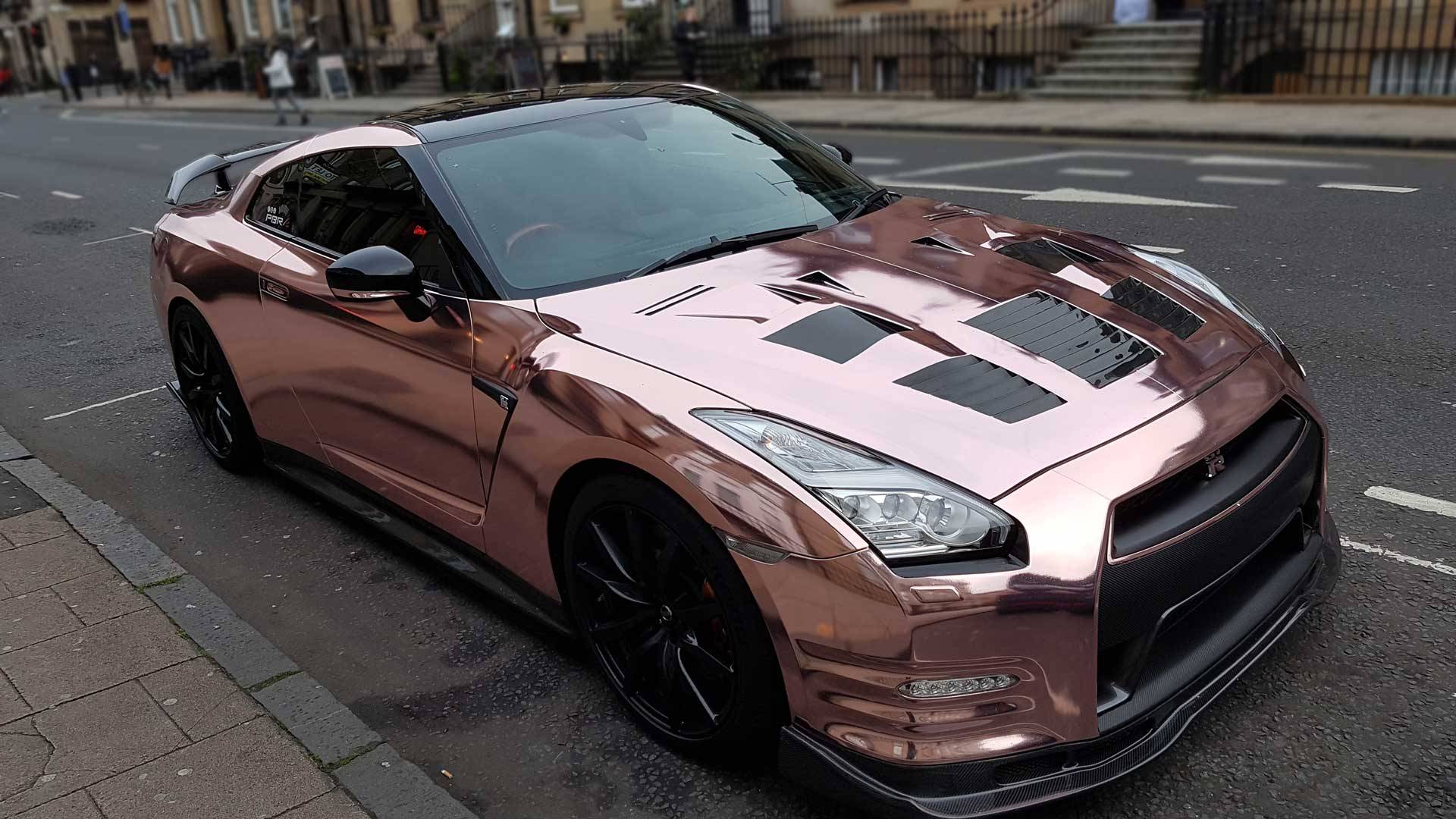
Pictured: Nissan GT-R R35 in custom rose gold finish
Nissan GT-R at Dowleys
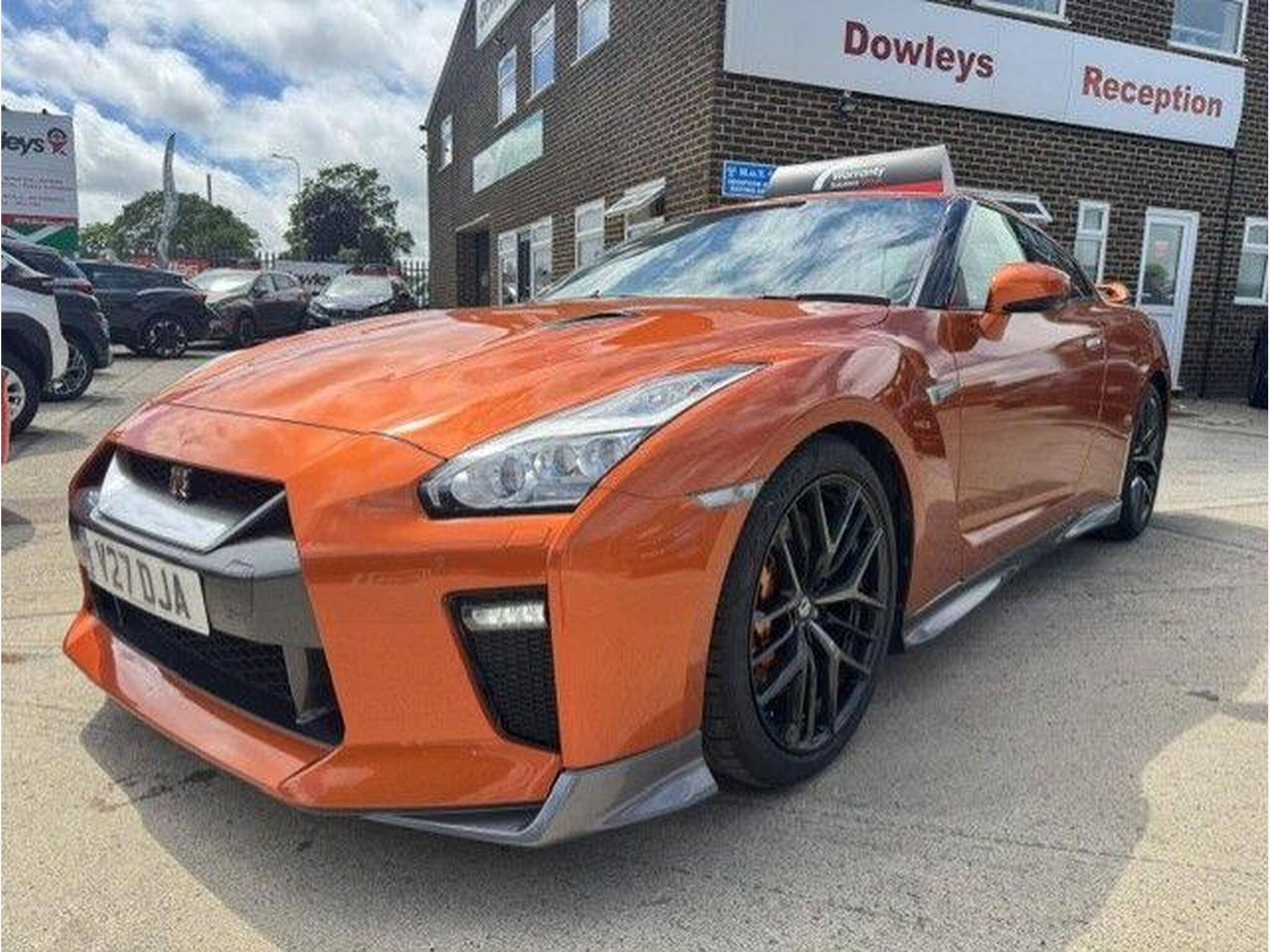
At the time of writing this article, at Dowleys we have in stock an exceptional 2016 Nissan GT-R 3.8 V6 Prestige, finished in striking Gold. With just 23,941 miles recorded from new and a single previous owner, this Japanese performance icon has been meticulously cared for and cherished. It benefits from a full dealership service history, a clear vehicle history check, and will be supplied with a 12-month MOT.
Hero Photo (White GT-R) by Calvin Priddell on Unsplash


Vehicle servicing
Regularly servicing your vehicle is a proven way to extend its lifespan.
Book OnlineTyres
We prioritise the supply and fitting of tyres due to their critical role in ensuring vehicle safety.
Book OnlineVehicle Maintenance and Repairs
We offer a wide range of repair and maintenance services using the latest equipment.
Book Online